An olive tree through a Lviv winter
Olives want Mediterranean winters: cool, bright and dry. A warm flat gives them none of that. How we keep ours alive until spring.
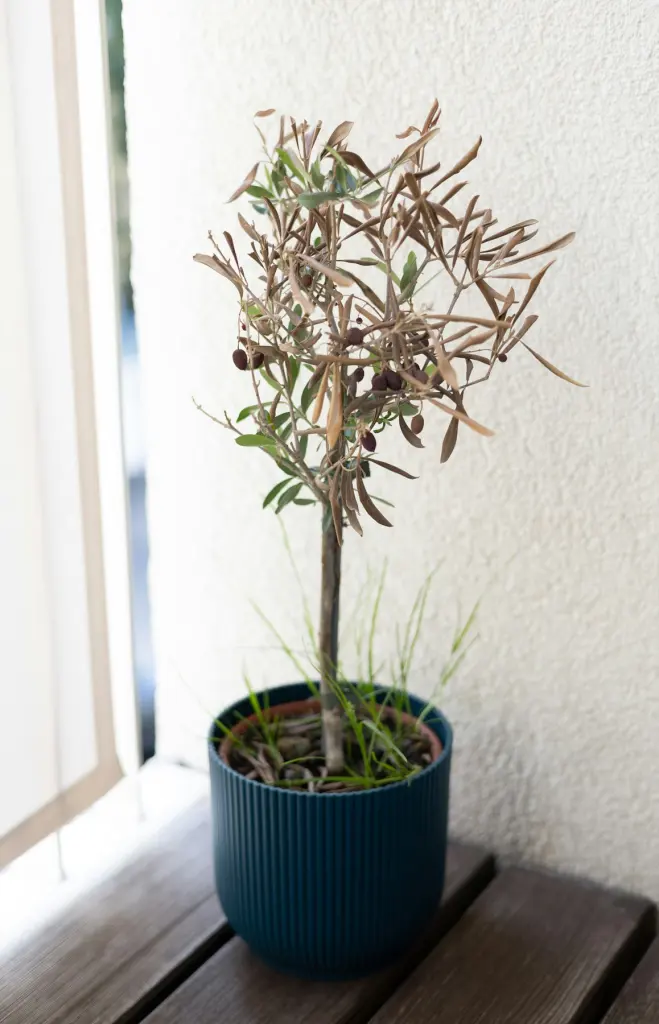
Olive trees are the most asked-about plant in the shop from October to December, and the most returned-to-the-shop-in-a-sad-state from January to March. They are not difficult. They are just very specific about winter.
What an olive expects
In its home climate, an olive spends winter cool (5–10 °C), bright and fairly dry. That cold rest is when it sets flower buds for spring. A flat at 23 °C with the radiator under the window is the opposite: warm, dark and dry at the roots but hot at the leaves.
The best place
A cool, bright spot wins. An unheated glazed balcony or a stairwell window, as long as it stays above freezing, is ideal.1 If the only choice is a warm room, give it the brightest window and keep it far from the radiator.
Winter watering
Less than you think. In a cool spot, water every three or four weeks; in a warm room, when the top half of the soil is dry. Yellowing lower leaves in winter nearly always mean too much water, not too little.
- Never let the pot stand in water.
- Stop feeding from October to March.
- Turn the pot a quarter every week so it grows evenly.
Spring
When nights stay above 8 °C, usually in May here, move it outside in stages: a few hours of shade first, then more sun over two weeks. By June it will be putting out new silver shoots, and if the winter was cool enough, tiny cream flowers.
Notes
- Olives can take a few degrees of frost outdoors, planted in the ground. In a pot the roots have no protection, so treat 0 °C as the limit. Jump to footnote reference 1
From the shop
Ask the gardener
A question about your own plant? Olena answers by email, usually within two days.