Repotting a fig tree without the drama
Fiddle-leaf figs sulk when you move them. Here is how we repot ours in the studio so the sulk lasts days, not months.

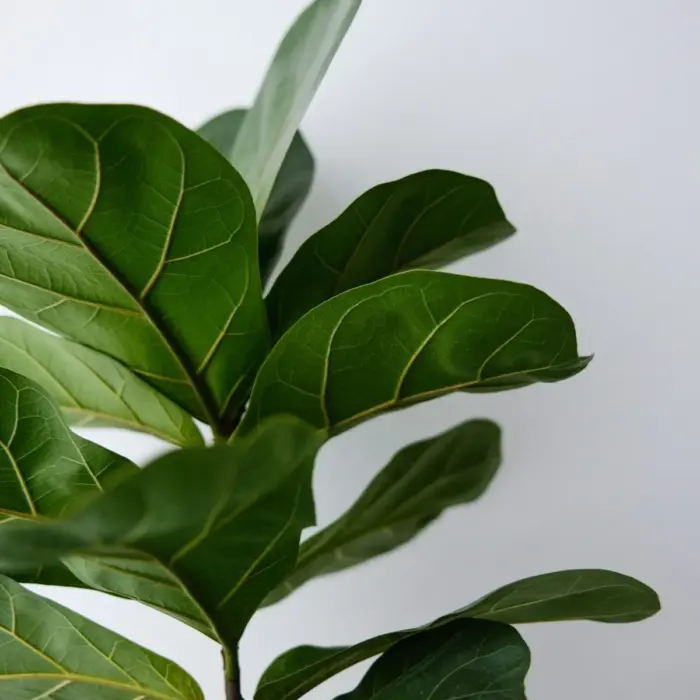
Fiddle-leaf figs have a reputation, and they earned it. Move one across the room and it drops a leaf. Repot it badly and it drops six. But a fig that has filled its pot will slowly starve, so sooner or later you have to do it. The trick is to make the move so small, from the plant's point of view, that it barely notices.
Is it time?
Look underneath before you look at the calendar. Roots circling the drainage hole, water running straight through, or a pot that tips over when the plant leans are all good reasons. A fig that simply looks tired in October is not; that is the light going, and a new pot will not fix it.
We repot between April and early July, when the days are long enough for new roots to grow straight away.1 An August repot is fine; an October one is a gamble.
Choose a pot only a little bigger
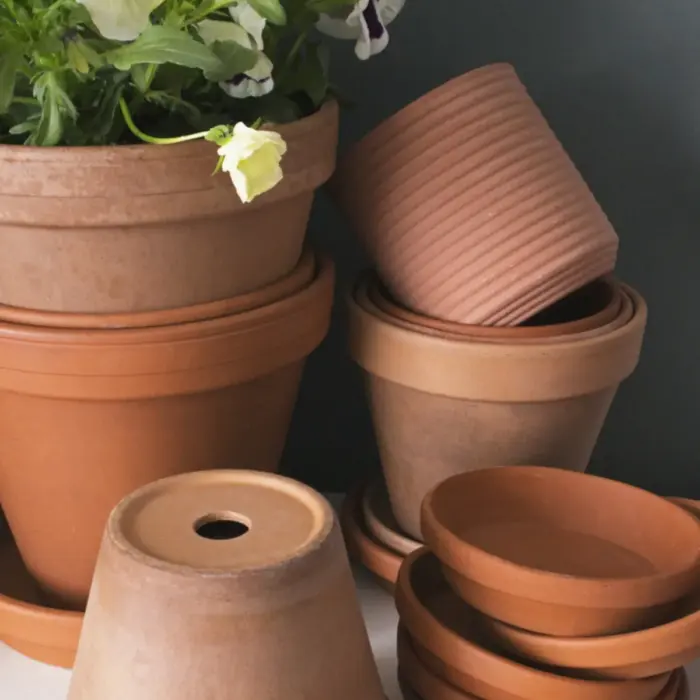
The most common mistake we see at the studio is ambition. A pot 10 cm wider than the old one holds a lot of soil the roots cannot reach yet, and that soil stays wet for weeks. Go up 3–5 cm in diameter, no more, and make sure there is a hole in the bottom.
- Terracotta dries faster and forgives heavy watering.
- Glazed stoneware holds moisture longer; water a little less.
- A saucer is not drainage. Empty it twenty minutes after watering.
The move itself
Water the fig the day before, not on the day: moist roots hold the soil together and slide out in one piece. Lay the pot on its side, press the sides, and ease the plant out by the base of the trunk, never by the stem.
Tease the outer roots loose with your fingers. If they circle tightly, make three shallow vertical cuts with a clean knife; it looks brutal, and it is the kindest thing you can do for a root-bound plant. Set the fig at the same depth it was growing before, fill around it, and firm gently. Do not bury the trunk.
A fig does not mind a new pot. It minds a new window, a new draught and a new pot on the same afternoon.
The week after
Put it back exactly where it was, turned the same way. Water once, thoroughly, and then leave it alone until the top few centimetres are dry. Skip fertiliser for a month: fresh soil has enough, and new roots burn easily.
It may drop a lower leaf. That is the sulk, and it passes. If it drops three or four, check the soil is not staying wet, and resist the urge to move it to a "better" spot. Patience is most of the job.
If you would rather do it with us the first time, the Saturday repotting workshop covers exactly this, with soil and a pot to take home.
Notes
- Lviv gets about 16 hours of daylight in late June and under 8 in December. Roots grow on the energy of the leaves, so the long days matter more than the warmth. Jump to footnote reference 1
From the shop
Ask the gardener
A question about your own plant? Olena answers by email, usually within two days.