Taking cuttings from a string of pearls
A trailing succulent that is easy to multiply and easy to drown. Lay the strands on soil, not in water.
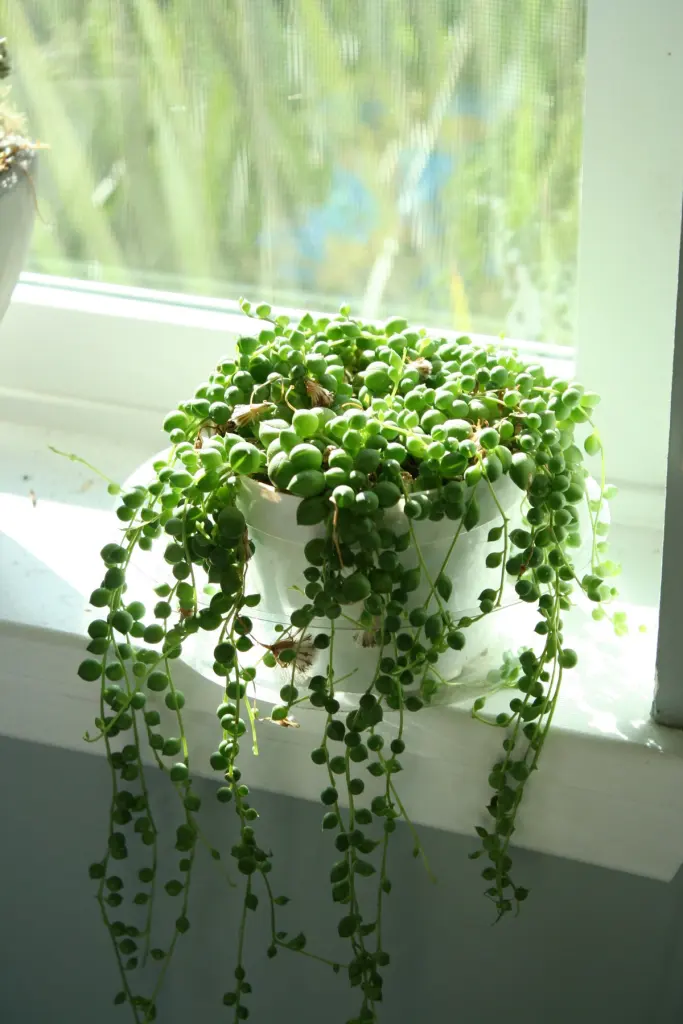
String of pearls looks delicate and is actually tough, as long as you do one thing right: do not overwater it. Propagating it is simpler than keeping it, and a good way to fill out a thin pot.
Why not water?
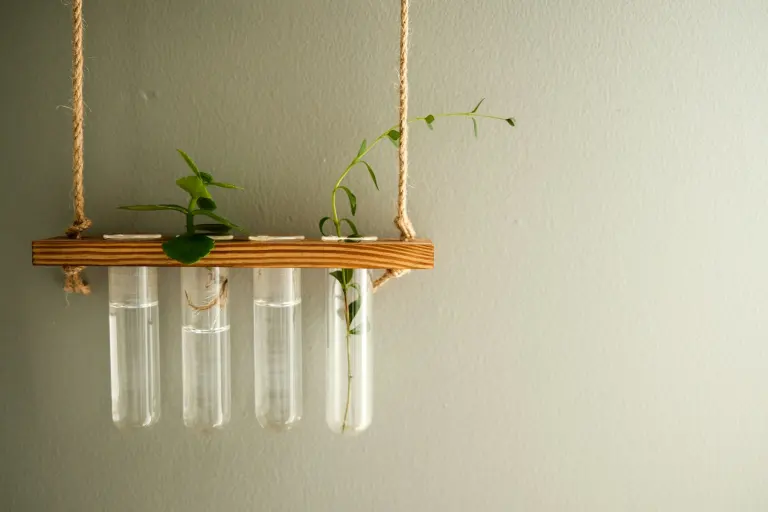
Pothos roots happily in a glass. String of pearls usually rots there: succulent stems are full of water already and are not built to sit in more. Soil propagation works better, and there are two easy ways.
Method one: lay them on top
Cut strands about 10 cm long. Pull the pearls off the bottom 2 cm, and let the cut ends dry for a day or two until they seal. Then lay the strands on top of slightly damp cactus mix, pressing the bare part gently into the soil. Roots grow from where the pearls were.
Method two: pin them down
Leave the strand attached to the mother plant and pin it to a neighbouring pot of soil with a bent paperclip. It roots while still being fed, and you cut it free after three or four weeks. This is slower to set up and nearly foolproof.
- Mist the soil surface lightly every few days, not the pearls.
- Bright, indirect light while rooting; direct sun after.
- Give a gentle tug after three weeks: resistance means roots.((No resistance at four weeks usually means the soil is too dry, not too wet — succulent cuttings need a little moisture to bother growing roots.))
Back into the mother pot
The best use of new cuttings is often to plant them back into the top of the original pot. String of pearls thins out at the crown over time, and a few rooted strands there make it full again.
From the shop
Ask the gardener
A question about your own plant? Olena answers by email, usually within two days.