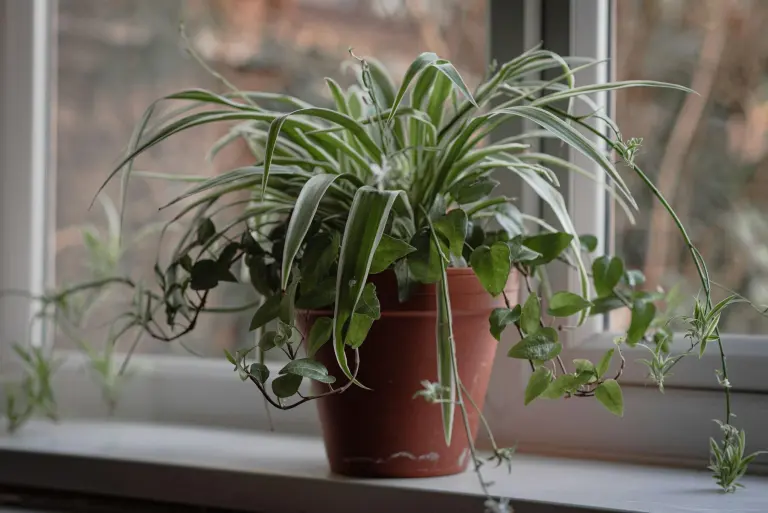
The monstera that outgrew the flat
A customer's monstera reached the ceiling. We repotted it, gave it a moss pole and taught it to climb instead of sprawl.

In June, a customer sent us a photo of her monstera. It had reached the ceiling in one corner and was heading for the sofa in the other. "Can you do something?" she asked. We could, and it took an afternoon, two people and a very large pot.
Monsteras want to climb
In the wild, Monstera deliciosa is a climber. It grows across the forest floor until it finds a tree and then goes up, and as it climbs, the leaves get bigger and grow their famous holes. Left without support in a flat, it sprawls sideways, and the new leaves stay small.
A moss pole is a fake tree. Aerial roots grip it, the stem goes up instead of out, and the plant takes up a lot less floor.
The repot
We went up one pot size, to 35 cm, and set the pole in the pot before the plant, pushed right down to the bottom so it would not lean later. Then the plant went in against the pole, with its oldest stem touching it.
- Tie the stem to the pole with soft plant ties, not wire.
- Point the aerial roots at the moss; they will find it.
- Keep the moss damp, so the roots have a reason to grip.
Pruning, without guilt
The longest sideways stem had to go. We cut it just below a node, and it became three new plants in water: one for the customer's sister, two for the studio shelf.1
Three months later
By September the plant had put out two new leaves on the pole, each bigger than anything it had grown on the floor, and the corner by the sofa was free again. The ceiling is still a problem for next year. That is what extension poles are for.
Notes
- Monstera cuttings root the same way as pothos, only slower: a node is essential, and a piece of aerial root speeds things up a lot. Jump to footnote reference 1
From the shop

Ask the gardener
A question about your own plant? Olena answers by email, usually within two days.